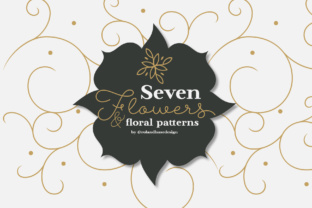
Elevating Visual Identity with 7 Flowers and Floral Patterns: A Strategic Asset for Modern Creators
In the contemporary landscape of digital design and product development, the demand for authentic, customizable visual assets has never been higher. As brands and independent creators navigate an increasingly saturated market, the distinction between generic stock imagery and bespoke, adaptable design elements has become a critical differentiator. This shift in consumer expectation and professional workflow places resources like 7 Flowers and Floral Patterns at the forefront of creative strategy. Far from being mere decorative afterthoughts, these seven flower and floral pattern vectors represent a sophisticated intersection of artistic tradition and technical versatility, serving as foundational building blocks for everything from high-end packaging to digital user interfaces.
The relevance of this specific collection extends beyond its aesthetic appeal. It addresses a fundamental pain point in modern design workflows: the need for scalability without sacrificing uniqueness. By providing files in Ai, Eps, and SVG formats, this resource aligns perfectly with the current industry standard for resolution-independent graphics. Whether you are a freelancer designing a boutique logo or a marketing director overseeing a global rebrand, the ability to manipulate vector-based florals ensures that your visual identity remains crisp across all mediums. This article explores why versatile floral assets are experiencing a renaissance and how professionals can leverage them to meet evolving business and creative needs.
The Resurgence of Botanical Design in Digital and Physical Spaces
To understand the value of 7 Flowers and Floral Patterns, one must first contextualize the broader trend of biophilic and organic design. Over the past decade, we have witnessed a significant pivot away from the sterile minimalism that dominated the early 2000s toward warmer, more human-centric aesthetics. This is not merely a stylistic preference but a response to consumer psychology. In an era defined by rapid technological advancement and digital fatigue, audiences crave connection, nostalgia, and organic softness. Floral patterns serve as a visual shorthand for these qualities, bridging the gap between corporate professionalism and emotional resonance.
However, the application of florals has matured. We are no longer seeing the repetitive, flat textures of previous decades. Today’s market demands depth, customization, and intentionality. The seven distinct floral vectors discussed here cater to this nuance by offering modularity. Unlike raster images that lock designers into a single composition, these vectors allow for the deconstruction and reassembly of botanical elements. This modularity is essential for businesses that need to maintain brand consistency across diverse touchpoints while adapting to seasonal campaigns or regional preferences. The ability to combine and customize these patterns mirrors the agile methodologies now prevalent in both tech and creative industries, where flexibility is synonymous with resilience.
Technical Versatility: Why Vector Formats Matter
The technical specifications of a design asset often dictate its utility in a professional environment. The availability of 7 Flowers and Floral Patterns in Ai, Eps, and SVG formats is a deliberate choice that supports modern cross-platform workflows. For entrepreneurs and marketers, understanding the distinction between these formats is crucial for maximizing ROI on creative assets.
- Adobe Illustrator (Ai): This is the native source file, offering unlimited editability. It allows designers to adjust anchor points, reshape petals, and fundamentally alter the geometry of the flowers. This level of control is necessary for creating proprietary logos or unique brand marks derived from the base patterns.
- Encapsulated PostScript (Eps): As a universal vector standard, Eps files ensure compatibility across various software ecosystems. For agencies collaborating with external vendors or print shops using legacy systems, Eps guarantees that the floral integrity remains intact regardless of the platform.
- Scalable Vector Graphics (SVG): In the digital-first economy, SVG is indispensable. These files are code-based, meaning they scale infinitely without pixelation and can be animated via CSS or JavaScript. For web designers and app developers, integrating these floral patterns as SVGs ensures fast load times and responsive behavior on mobile devices, directly impacting SEO and user experience metrics.
This technical triad ensures that the asset is future-proof. As display technologies evolve toward higher pixel densities and new form factors like foldable screens, vector-based florals remain relevant, whereas raster alternatives would require constant regeneration and upscaling.
Customization as a Competitive Advantage
The true power of this collection lies in its malleability. The prompt notes that users can "add and change colors to make it even more variable." This capability transforms a static art pack into a dynamic design system. In branding, color is the primary carrier of meaning. A deep emerald green evokes sustainability and luxury, while a vibrant coral suggests energy and youth. By allowing full color manipulation, 7 Flowers and Floral Patterns enables creators to align botanical motifs strictly with established brand guidelines rather than forcing a brand to adapt to pre-colored artwork.
Furthermore, this customization supports the growing trend of hyper-personalization in consumer goods. Print-on-demand businesses and Etsy sellers, for example, can use the same base floral vectors to create dozens of distinct SKUs simply by altering the color palette or rearranging the composition. This reduces the time-to-market for new products and allows for rapid A/B testing of visual styles. For greeting card designers, this means creating cohesive collections where the floral elements echo the sentiment of the message through color psychology, enhancing the emotional impact of the product.
Practical Applications Across Industries
The versatility of these seven floral vectors makes them applicable to a wide spectrum of professional projects. Understanding these use cases helps professionals justify the integration of such assets into their resource libraries.
- Product Packaging and Labeling: In the beauty, wellness, and artisanal food sectors, packaging is the silent salesman. Customizable floral patterns provide the necessary elegance and organic signaling that consumers associate with natural ingredients. Because these are vectors, they can be scaled to fit anything from a 5ml essential oil bottle to a large shipping box without loss of quality.
- Embroidery and Textile Design: The digitization of embroidery relies heavily on clean, closed paths. Vector florals are ideal starting points for digitizing software, reducing the cleanup time required to convert art into stitch files. Fashion designers and merchandisers can adapt these patterns for apparel, ensuring that the motif works equally well as a small chest emblem or an all-over print.
- Digital Branding and Logos: While complex illustrations rarely work as standalone logos, individual floral elements from this set can be abstracted or simplified to create unique brand symbols. The ability to edit the Ai file allows designers to strip away unnecessary detail, resulting in a mark that is legible at favicon size yet detailed enough for signage.
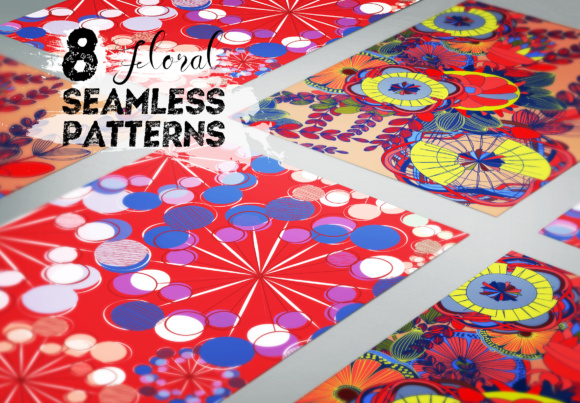
- Wallpapers and Environmental Graphics: For interior designers and event planners, large-format printing requires massive resolution. Vector patterns eliminate the anxiety of pixelation when printing wall murals or trade show backdrops. The seamless nature of the patterns allows for coverage of arbitrary surface areas without visible tiling artifacts.
Typography and Visual Hierarchy
A floral pattern does not exist in a vacuum; it interacts dynamically with typography to create a complete visual narrative. The cover image associated with this collection utilizes Abigail Script and Beaumaris, two typefaces that exemplify the pairing strategy necessary for effective botanical design. Abigail Script offers a fluid, hand-lettered quality that mimics the organic curves of the flowers themselves, creating visual harmony. Conversely, Beaumaris provides a structured, serif-based counterpoint that grounds the design and ensures readability.
For professionals using 7 Flowers and Floral Patterns, this typographic relationship is a lesson in balance. When implementing these vectors, one must consider negative space and hierarchy. The florals should enhance the content, not compete with it. In web design, this might mean using the floral patterns as subtle background textures with reduced opacity to maintain WCAG accessibility standards for text contrast. In print, it might involve using spot UV coating on the floral elements to create tactile differentiation from the matte paper stock. The synergy between the vector art and complementary typography elevates the final output from a simple graphic to a polished, professional communication piece.
Adapting to Changing Creative Workflows
The creative industry is currently undergoing a transformation driven by efficiency and ethical sourcing. Clients expect faster turnarounds, yet they also demand originality. Simultaneously, there is a heightened awareness regarding licensing and intellectual property. Utilizing comprehensive, multi-format vector packs like this one addresses these pressures simultaneously. They provide a legal, high-quality foundation that accelerates the ideation phase while avoiding the ethical gray areas of AI-generated imagery or unlicensed scraping.
Moreover, the modular nature of these seven flowers supports non-linear workflows. Designers are no longer bound to a single "final" composition. Assets can be saved as symbols or libraries within Adobe Creative Cloud or Figma, allowing teams to drag and drop consistent floral elements across multiple artboards and projects. This systematic approach to decoration ensures that a brand’s visual language remains coherent even when executed by different team members or agencies over time.
Future-Proofing Your Creative Assets
As we look toward the future of visual communication, the line between physical and digital continues to blur. Augmented reality (AR) experiences, virtual goods, and phygital retail environments require assets that live natively in 3D and interactive spaces. Vector-based florals are uniquely positioned for this transition. An SVG can be extruded into 3D geometry; an Ai file can be imported into motion graphics software for animation. By investing in high-quality, editable vector resources now, creators are effectively future-proofing their libraries against upcoming technological shifts.
Ultimately, 7 Flowers and Floral Patterns represents more than just a set of pretty pictures. It is a functional toolset designed for the rigors of professional creation. It acknowledges the diverse needs of embroiderers, web developers, brand strategists, and product designers, providing a common visual language that adapts to each specific context. In a marketplace that values both speed and substance, having reliable, customizable, and technically robust assets is not a luxury—it is a necessity for sustained creative success. Happy creating, and may these versatile vectors bring new life and profitability to your upcoming projects.