Evaluating the Coffee Cup Floral Mandala Design for Creative Projects
The intersection of caffeine culture and intricate artistry has produced a distinct niche in digital design, with the Coffee Cup Floral Mandala serving as a prime example. This specific design motif combines the universally recognized silhouette of a coffee cup with the meditative, symmetrical geometry of floral mandala patterns. For creators, crafters, and small business owners, understanding the utility and application of this design requires looking beyond its aesthetic appeal. When evaluating this asset, particularly when it is available in a comprehensive suite of formats including SVG, Transparent PNG, EPS, DXF, PNG, and JPG, the decision-making process should focus on technical compatibility, project suitability, and long-term versatility.
Defining the Design Aesthetic and Function
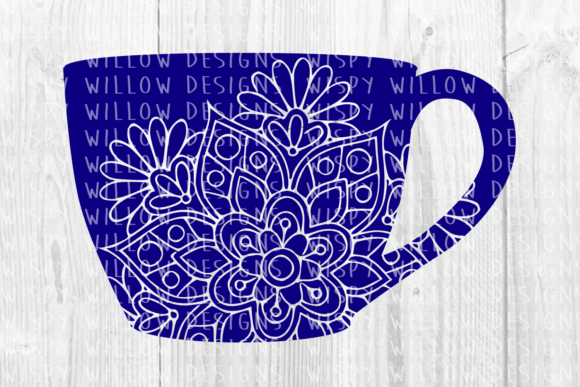
A Coffee Cup Floral Mandala is more than a simple illustration; it is a hybrid graphic that merges functional iconography with decorative ornamentation. The central element remains the vessel—typically a mug, tumbler, or steaming cup—which acts as the anchor for the composition. Radiating from or integrated within this anchor are botanical elements such as vines, petals, leaves, and geometric shapes arranged in radial symmetry. This fusion creates a visual shorthand that communicates both warmth and mindfulness.
From a functional perspective, this design serves as a versatile template. Unlike standalone floral patterns or generic coffee icons, the mandala structure provides a balanced focal point that works effectively on circular, square, and rectangular substrates. The intricacy of the linework allows for detailed rendering in vector formats, while the overall shape maintains readability at smaller scales. Understanding this dual nature is essential for determining whether the design aligns with specific branding or crafting objectives.
Assessing File Format Versatility
The value of any digital design asset is intrinsically linked to the file formats provided. When acquiring a Coffee Cup Floral Mandala, receiving the design in SVG, Transparent PNG, EPS, DXF, PNG, and JPG covers nearly every potential use case. Evaluating which format to utilize is a critical step in the workflow.
- SVG (Scalable Vector Graphics): This is the industry standard for electronic cutting machines like Cricut and Silhouette. Because SVGs are math-based rather than pixel-based, they allow for infinite resizing without quality loss. For this specific mandala design, the SVG format is crucial for separating layers, allowing users to manipulate individual floral elements or change the color of the cup independently.
- EPS (Encapsulated PostScript): Preferred by professional designers using Adobe Illustrator or CorelDRAW, EPS files maintain vector integrity across different software platforms. This format is ideal for those who intend to heavily modify the Coffee Cup Floral Mandala, integrate it into complex branding kits, or prepare it for commercial offset printing.
- DXF (Drawing Exchange Format): Specifically relevant for laser cutting and engraving. If the goal is to etch the mandala onto wood, leather, or slate coasters, the DXF format provides clean line paths that laser software can interpret accurately. It is also compatible with certain CAD programs for architectural or industrial design applications.
- Transparent PNG: Essential for print-on-demand services and digital mockups. The transparency ensures that the mandala integrates seamlessly with colored backgrounds or garment fabrics without a white box artifact. This format preserves high resolution for direct-to-garment (DTG) printing and sublimation.
- JPG and Standard PNG: These raster formats serve as reference files, social media assets, or low-stakes digital content. While not suitable for cutting or large-scale printing, they are necessary for quick previews, website thumbnails, or digital planner stickers where vector capability is unnecessary.
Situations Where This Design Excels
The Coffee Cup Floral Mandala is a strong fit for specific market segments and project types. Its primary strength lies in the "cozy" aesthetic, making it highly effective for businesses and creators targeting audiences interested in self-care, reading, and café culture. Bookstagram accounts, tea shops, and mental health advocates often find this hybrid imagery resonates deeply because it visually represents a pause or a moment of reflection.
Technically, the design performs exceptionally well in laser engraving and vinyl decal applications. The radial symmetry of the mandala naturally fits round objects like tumblers, mugs, and coasters. Unlike asymmetrical illustrations that require careful positioning to avoid looking unbalanced on curved surfaces, the mandala’s geometry simplifies placement. Furthermore, the density of the floral lines provides excellent coverage for etching, creating rich texture contrasts on natural materials like bamboo or cork.
For apparel, specifically sweatshirts and tote bags, this design offers a gender-neutral yet decorative option. It avoids the overly masculine tropes of stark coffee iconography and the potentially overly feminine associations of pure florals, striking a balance that appeals to a broad demographic. This makes it a safer choice for merchandise intended for general retail rather than niche gifting.
Tradeoffs and Considerations
Despite its versatility, there are practical tradeoffs to consider before selecting a Coffee Cup Floral Mandala. The complexity of mandala designs can be a limitation in certain manufacturing contexts. For screen printing, highly detailed intersecting lines may require expensive multi-color setups or high mesh counts to prevent ink bleed. In these cases, a simpler, bold-line coffee illustration might be more cost-effective.
Additionally, the stylistic specificity of the mandala can date a design faster than minimalist alternatives. While currently popular, the boho-mandala trend has peaked in various cycles over the last decade. Creators building a timeless brand identity should evaluate whether this ornate style aligns with their long-term vision or if it serves better as a seasonal or trend-responsive addition to their catalog.
File management also presents a consideration. Because the design includes intricate vector paths, SVG and DXF files can be computationally heavy. Users with older computers or basic cutting machine software may experience lag when loading or manipulating the full-resolution Coffee Cup Floral Mandala. It is often necessary to simplify nodes or reduce detail levels for smoother processing, which requires additional time and technical skill.
Determining Alignment with Project Goals
Deciding whether to incorporate this design requires an honest assessment of current needs versus future flexibility. If the immediate goal is to produce physical products for a coffee-loving demographic using digital fabrication tools, the inclusion of DXF and SVG formats makes this asset a high-value acquisition. The ready-to-cut nature reduces development time significantly.
However, if the objective is corporate branding or high-end luxury packaging, the whimsical nature of a floral mandala may clash with desired perceptions of sleekness or exclusivity. In such scenarios, alternatives focusing on negative space, typography, or abstract geometry may yield better results. Similarly, for users who lack vector editing software and only possess raster capabilities, the value proposition diminishes unless the pre-rendered Transparent PNG meets exact dimensional requirements.
Ultimately, the Coffee Cup Floral Mandala represents a specialized tool in the digital creator's arsenal. Its worth is determined not just by the beauty of the artwork, but by the alignment between its included file formats and the user's production pipeline. By weighing the technical specifications against the intended application, creators can make informed decisions that maximize both creative satisfaction and operational efficiency. Whether used for a single personalized gift or a scalable product line, success depends on matching the design’s inherent characteristics with the practical realities of the project at hand.