Integrating the Rhino Floral Mandala into Professional and Creative Workflows
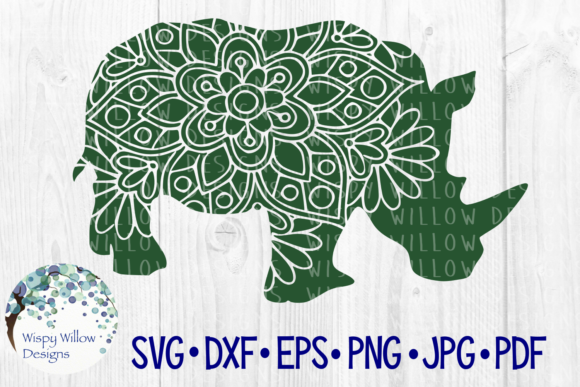
The intersection of zoological illustration and sacred geometry offers a unique aesthetic that appeals to a diverse range of creators, from laser cutting enthusiasts to textile designers. The Rhino Floral Mandala represents a sophisticated fusion of natural strength and botanical delicacy, creating a visual motif that is both grounding and intricate. Unlike standard geometric patterns or standalone animal portraits, this hybrid design leverages the structural complexity of the rhinoceros silhouette as a framework for organic floral expansion. Understanding how to effectively utilize this specific artistic synthesis requires a grasp of both its symbolic resonance and its technical execution across various digital and physical mediums.
Cross-Industry Applications and Practical Use Cases
The versatility of a floral rhino mandala extends far beyond simple decoration. Its balanced composition makes it uniquely suited for industries that require high-impact visuals with scalable detail. Professionals and hobbyists alike find value in this design because it bridges the gap between masculine and feminine aesthetics, allowing for broader market appeal in commercial products.
Laser Cutting and CNC Fabrication
For makers utilizing CO2 lasers, diode lasers, or CNC routers, the line work in a mandala design is critical. The Rhino Floral Mandala is typically engineered with continuous paths and optimized nodes to prevent burning or charring during the cutting process. When applied to wood, acrylic, or leather, the negative space created by the floral elements within the rhino’s form adds depth without compromising structural integrity. This makes it ideal for creating wall art, custom signage, or intricate furniture inlays where the contrast between the solid animal outline and the delicate internal botany creates a striking three-dimensional effect.
Textile and Surface Pattern Design
In the fashion and home decor sectors, this motif serves as a powerful central element for screen printing, embroidery, and sublimation. The circular nature of the mandala allows for easy tiling or placement as a focal point on garments. A floral rhino mandala works exceptionally well on denim jackets, canvas tote bags, and bohemian-style tapestries. Because the design integrates organic curves with a recognizable animal form, it avoids looking overly repetitive when scaled up for large-format fabric printing. Designers often use the transparent PNG version to layer this graphic over textured backgrounds, creating depth in apparel mockups before production.
Educational and Therapeutic Art Resources
Educators and art therapists recognize the cognitive benefits of complex imagery. The detailed layers of a Rhino Floral Mandala provide an excellent resource for mindfulness exercises, color theory lessons, and fine motor skill development. In classroom settings, the PDF format serves as a ready-to-print worksheet for students exploring symmetry, biology, and artistic expression simultaneously. The duality of the image—the sturdy rhino and the ephemeral flowers—also opens avenues for discussion regarding nature, conservation, and balance, making it a multidisciplinary tool rather than just a coloring page.
Navigating Vector Formats for Precision Manufacturing
Access to multiple file types is not merely a convenience; it is a necessity for professional output. Each format included in the listing serves a distinct technical purpose that dictates the quality and feasibility of the final product. Understanding when to deploy the EPS, DXF, or SVG file is fundamental to maintaining design fidelity.
EPS and DXF: The Industrial Standards
The Encapsulated PostScript (EPS) file remains the gold standard for professional print shops and large-format plotting. It retains mathematical curve data that ensures edges remain crisp regardless of magnification. For those operating heavy machinery like plasma cutters or vinyl plotters, the DXF (Drawing Exchange Format) file is indispensable. DXF files strip away unnecessary metadata and focus purely on path geometry, ensuring compatibility with older CAD software and industrial controllers. When working with the Rhino Floral Mandala in a manufacturing context, the DXF ensures that the machine interprets every petal and contour exactly as intended, minimizing material waste and processing errors.
SVG: The Digital and Web Native
Scalable Vector Graphics (SVG) have revolutionized how creators interact with digital cutting machines like Cricut and Silhouette. Unlike raster images, the SVG file for the floral rhino mandala allows users to ungroup elements, change individual colors, and resize designs without pixelation directly within crafting software. This format is also essential for web designers who wish to incorporate the motif into responsive websites. An SVG renders sharply on retina displays and loads faster than high-resolution raster alternatives, making it the superior choice for digital portfolios, e-commerce listings, and interactive media.
Raster Assets for Immediate Visualization and Mockups
While vectors drive production, raster files facilitate communication and presentation. The inclusion of PNG and JPEG formats addresses the immediate needs of marketers, sellers, and clients who may not possess vector editing software.
Transparent PNGs for Compositing
The transparent PNG file is perhaps the most versatile asset for digital creators. It allows the Rhino Floral Mandala to be placed over any background color, texture, or photograph without the need for manual masking. This is crucial for creating realistic product mockups. For example, a seller on Etsy can overlay the transparent mandala onto a photo of a plain t-shirt to show customers what the finished product will look like. The transparency preserves the intricate cutouts of the mandala, ensuring that the background shows through the floral gaps naturally, which is impossible with a flattened JPEG.
JPEG for Documentation and Proofing
The JPEG file serves as a universal reference point. It is lightweight, universally compatible, and perfect for email proofs, social media sharing, and catalog thumbnails. When collaborating with clients who cannot open vector files, sending a high-resolution JPEG of the floral rhino mandala ensures everyone is aligned on the design before fabrication begins. It also acts as a visual backup; if vector files become corrupted or incompatible with a specific legacy system, the JPEG provides a traceable template for manual recreation or verification.
Design Considerations and Material Selection
Successfully implementing a Rhino Floral Mandala requires more than just downloading the files; it demands an understanding of how the design interacts with physical materials. The density of the mandala pattern means that material choice significantly impacts the final aesthetic and durability.
- Wood Grain Interaction: When cutting this design from plywood or hardwood, consider the direction of the grain. Horizontal grain lines can sometimes visually compete with the horizontal symmetry of the rhino’s base. Rotating the design 45 degrees or selecting quarter-sawn lumber can help the floral rhino mandala stand out against the natural texture of the wood.
- Acrylic Color Theory: Clear acrylic allows for reverse painting techniques where the back of the mandala is painted while the front remains glossy. Alternatively, using two-tone acrylics (e.g., black core with white surface) enhances the contrast of the intricate floral details embedded in the rhino silhouette.
- Paper Weight for Printing: For educational or therapeutic coloring applications, paper weight matters. Standard copy paper may bleed with markers. Using cardstock or specialized mixed-media paper ensures that the fine lines of the Rhino Floral Mandala hold up to wet media, preserving the user experience.
- Metal Etching Depth: If using the DXF file for fiber laser etching on metal, adjust power settings to account for the varying line weights. The thicker outer contours of the rhino may require different parameters than the delicate inner floral veins to achieve uniform visibility.
Optimizing Workflow Efficiency with Multi-Format Bundles
Time is a tangible cost for professionals and hobbyists. The primary advantage of acquiring a comprehensive bundle containing EPS, DXF, SVG, PDF, PNG, and JPEG formats is the elimination of conversion friction. Converting files between formats using third-party tools often results in node distortion, lost layers, or sizing discrepancies. By utilizing native files specifically exported for their intended use cases, creators ensure that the Rhino Floral Mandala maintains its original precision.
For business owners selling finished goods, this multi-format approach streamlines the supply chain. The same source design can be sent to a laser cutter for wooden signs (DXF), a screen printer for apparel (EPS), and a web developer for the online store (SVG/PNG) without requiring separate design sessions. This consistency builds brand recognition and ensures that the floral rhino mandala looks identical across all touchpoints, reinforcing quality and professionalism in the eyes of the consumer.
Furthermore, having access to the editable vector sources (EPS/SVG) future-proofs the asset. As trends shift or specific customization requests arise, the ability to modify the floral density, adjust the rhino’s posture, or add personalized text within the mandala structure transforms a static purchase into a dynamic design foundation. This adaptability is what separates a generic clip-art download from a professional-grade creative asset capable of supporting sustained business growth and artistic exploration.