Evaluating Floral Bouquets Cut Files for Digital Crafting and Print Projects
Selecting the right digital assets for crafting or small business production requires balancing aesthetic appeal with technical versatility. When researching floral designs for electronic cutting machines or print-on-demand products, creators often encounter a choice between individual botanical elements and pre-arranged compositions. Floral Bouquets cut files represent a distinct category within this marketplace, offering pre-designed clusters of flowers rather than isolated stems. Understanding the specific utility, format compatibility, and practical tradeoffs of these bundled designs is essential for determining if they align with your current project requirements or workflow limitations.
Distinguishing Pre-Arranged Bouquets from Individual Botanicals
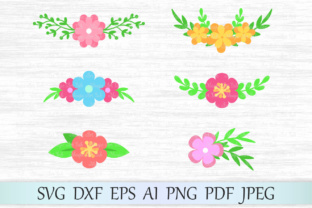
The primary distinction between Floral Bouquets and standard floral cut files lies in composition and workflow efficiency. Individual floral vectors allow for maximum customization, enabling designers to build arrangements from scratch. However, this approach demands significant time and an understanding of color theory and spatial balance. In contrast, Floral Bouquets provide a cohesive, professionally balanced arrangement that functions as a single unit or a set of coordinated units.
This distinction matters significantly when evaluating production speed versus creative control. For users creating vinyl stickers, postcards, or apparel graphics under tight deadlines, the pre-arranged nature of these bouquets eliminates the design phase entirely. The tradeoff is flexibility; while you can separate elements within a bouquet file, the original spacing and color relationships were designed as a fixed system. If your goal is to create highly unique, custom-scattered patterns across a large surface area, individual elements may offer better long-term value. Conversely, if you need centered, focal-point graphics for t-shirts, pillowcases, or greeting cards, the bouquet format offers immediate usability that individual stems cannot match without additional design labor.
Assessing Format Compatibility Across Machines and Software
A critical decision factor when acquiring digital craft assets is ensuring file compatibility with your specific hardware and software ecosystem. This particular Floral Bouquets collection addresses fragmentation by providing six distinct formats, each serving a different technical purpose. Evaluating which format you actually need prevents unnecessary file management overhead.
- SVG (Scalable Vector Graphics): The industry standard for electronic cutting machines like Cricut Design Space and Silhouette Studio Designer Edition. SVGs retain vector paths, allowing for infinite resizing without quality loss and enabling layer separation for multi-color vinyl applications.
- DXF (Drawing Exchange Format): Essential for users of the basic, free version of Silhouette Studio, which does not support SVG imports. DXF files maintain cut lines but may sometimes require node cleanup compared to native SVGs.
- PNG (Portable Network Graphics): High-resolution raster images with transparent backgrounds. These are necessary for sublimation printing, direct-to-garment (DTG) printing, and digital planning. Unlike vectors, PNGs have fixed resolution limits and cannot be edited as cut paths.
- EPS (Encapsulated PostScript) & AI (Adobe Illustrator): Professional-grade vector formats intended for advanced editing in Adobe Illustrator, CorelDRAW, or Affinity Designer. These are relevant only if you plan to modify the underlying geometry of the bouquet or integrate it into complex commercial branding projects.
- PDF & JPEG: PDF serves as a universal vector preview and print-ready document, while JPEG provides a flattened, non-transparent image suitable for quick mockups or reference.
For most hobbyist crafters focusing on vinyl and paper, the SVG and DXF files will constitute 90% of usage. The inclusion of EPS and AI files elevates this resource above entry-level options, making it viable for professional designers who require source-file access. However, if you lack vector editing software, these specific formats add no functional value to your purchase, even though they increase the perceived completeness of the bundle.
Practical Applications and Material Considerations
The suitability of Floral Bouquets depends heavily on the intended output medium. While versatile, pre-arranged florals perform differently across vinyl, fabric, and paper substrates. Understanding these material-specific constraints helps avoid wasted media and failed projects.
Vinyl Stickers and Decals
When using these files for vinyl applications, complexity is the primary constraint. Intricate floral bouquets often contain small details that can be challenging to weed, especially on adhesive vinyl. Before committing to a full production run, test the smallest detail size against your blade condition and vinyl type. Heat transfer vinyl (HTV) generally tolerates finer details better than adhesive vinyl due to its fabric backing. For sticker creation, consider whether the bouquet’s internal negative spaces are large enough to remain intact after weeding. Some users find success by simplifying the design within their cutting software, removing interior veins or stamens to improve durability and reduce production time.
Apparel and Textile Printing
For t-shirts, bags, and pillows, the pre-composed nature of Floral Bouquets offers significant advantages. Center-chest placements on apparel typically require a self-contained graphic that reads well from a distance. A scattered arrangement of individual flowers often looks disjointed on garments unless carefully curated. These bouquet files provide the visual weight and focal hierarchy necessary for wearable art. When comparing sublimation versus HTV for these designs, note that sublimation allows for unlimited colors and gradients without the tactile bulk of vinyl layers. If the bouquet design relies on subtle shading or watercolor effects, prioritize the PNG files for sublimation over the SVG files intended for layered vinyl.
Paper Crafts and Stationery
Postcards, invitations, and scrapbooking represent perhaps the lowest-risk application for these files. Paper crafting tolerates higher detail levels than vinyl, and the ability to print-and-cut allows for photorealistic results that vinyl cannot achieve. Here, the distinction between vector and raster becomes less critical; both SVG and high-res PNG yield excellent results. The decision factor shifts to style coherence: ensure the bouquet’s artistic rendering matches your stationery suite. A line-art bouquet suits minimalist wedding invites, while a painterly, shaded bouquet fits vintage or romantic aesthetics. Evaluating the artistic style against your existing paper inventory prevents aesthetic mismatches that no amount of technical compatibility can resolve.
Comparative Value and Decision Factors
When weighing Floral Bouquets against alternative resources, consider three dimensions: cost-per-design, editability, and licensing scope. Free floral vectors available on public repositories often lack the cohesive arrangement quality of paid bundles and frequently come with restrictive personal-use-only licenses. Premium individual designer shops may offer superior artistic uniqueness but at a higher per-unit cost. This type of multi-format bundle occupies a middle ground: adequate professional quality with broad commercial utility at a moderate price point.
However, this middle-ground positioning involves compromises. You may find that certain bouquets in the set do not match your preferred aesthetic, effectively raising the true cost-per-usable-design. Before purchasing, audit all six designs against your upcoming project calendar. If only two of six bouquets fit your needs, the value proposition diminishes regardless of format variety. Additionally, verify the license terms regarding end-product sales. Some bundles permit unlimited physical product sales but restrict digital redistribution or template creation. Clarifying these boundaries upfront prevents compliance issues later.
When to Choose Alternatives Instead
Despite their versatility, Floral Bouquets cut files are not universally optimal. Consider seeking alternatives in these scenarios:
- You require seamless repeating patterns: Bouquets are discrete compositions, not tileable patterns. For wrapping paper, fabric yardage, or background fills, seek dedicated seamless pattern files instead.
- Your cutting machine has size limitations: Some older or compact cutting machines struggle with complex, node-heavy vector files. If your machine frequently fails on intricate designs, simpler silhouette-style florals may prove more reliable.
- You need editable color palettes: While vector files allow color changes, some bouquet designs use gradient meshes or raster effects embedded within the vector. These elements resist simple recoloring. If brand color matching is critical, verify that the bouquet uses solid fills or easily adjustable gradients before acquisition.
- Your project demands photographic realism: Cut files are inherently illustrative. If clients expect botanical accuracy or photographic quality, stock photography or specialized botanical illustration resources will serve better than generalized craft vectors.
Making an Informed Selection
The decision to acquire Floral Bouquets cut files should stem from a clear alignment between the asset’s characteristics and your production reality. Evaluate your primary output medium first: vinyl users must prioritize weedability and layer count, while print users should focus on resolution and color fidelity. Assess your software capabilities honestly; possessing EPS files without Illustrator access represents unused potential rather than added value. Finally, compare the bundle’s collective utility against your actual project pipeline rather than hypothetical future use cases.
By approaching this resource through the lens of practical application rather than format quantity alone, you ensure that your investment translates directly into finished products. Whether creating commercial merchandise or personal crafts, the right digital asset reduces friction between concept and completion. Floral Bouquets serve this function effectively for users whose needs align with pre-composed, multi-format versatility, while those requiring specialized patterns, photographic realism, or extreme editability may find better solutions elsewhere in the digital crafting ecosystem.